
Learn Hiragana Fast – Complete Beginner Guide (7 Days)
392 views
You open a Japanese learning app. Bright colors. A cheerful owl. Five minutes later you're staring at ぬ, め, and ね, wondering why they all suddenly look identical.
Almost every beginner hits this wall.
The good news? Hiragana isn't huge. Unlike learning thousands of Chinese characters, modern standard Japanese hiragana contains 46 basic characters, plus modified sounds (dakuten and handakuten), combinations (like きゃ), and a small っ used to double consonants. That's manageable. Very manageable.
I've watched learners spend three months "kind of" recognizing hiragana because they kept reviewing randomly instead of following a structured plan. Seven focused days usually beats thirty unfocused ones.
Let's build that foundation properly.
Why Hiragana Comes First
Japanese uses three writing systems together:
Writing System | Purpose | Characters |
|---|---|---|
Hiragana | Native Japanese words, grammar endings | 46 basic |
Katakana | Foreign words, loanwords, emphasis | 46 basic |
Kanji | Chinese-derived characters representing meaning | 2,000+ common |
Every beginner should master hiragana before touching much kanji.
Here's why.
Most beginner textbooks—including Genki, Minna no Nihongo, and Japanese From Zero!—expect you to recognize hiragana almost immediately. Even apps gradually remove romaji (Latin alphabet) because relying on English letters slows reading speed.
That transition feels uncomfortable.
Do it anyway.
The 7-Day Hiragana Learning Plan
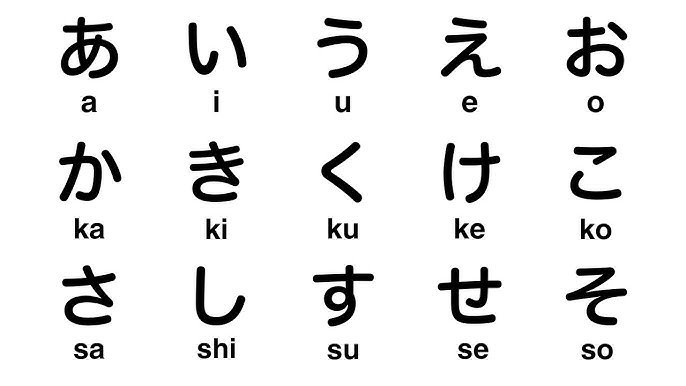
Day 1: Learn the Vowels and K-Line
Start with the simplest sounds.
Vowels | K-Series |
|---|---|
あ (a) | か (ka) |
い (i) | き (ki) |
う (u) | く (ku) |
え (e) | け (ke) |
お (o) | こ (ko) |
Only ten characters today.
Write each one around 20 times while saying the pronunciation aloud.
It feels repetitive. That's the point.
Your brain remembers movements surprisingly well, which is why handwriting still helps even if you mainly type later.
Day 2: S, T and N Sounds
Add:
さ し す せ そ
た ち つ て と
な に ぬ ね の
This is where confusion usually begins.
Many beginners mix these up:
ぬ vs め
れ vs わ
あ vs お
さ vs き
Instead of trying to memorize visually, create tiny stories.
For example:
ぬ has a "loop with a tail."
め looks like it wrapped itself up.
It sounds silly.
Silly sticks.
Day 3: H, M and Y
Today's additions:
は ひ ふ へ ほ
ま み む め も
や ゆ よ
Something interesting appears here.
The character は normally reads ha, but when used as the grammatical topic particle, it's pronounced wa. You'll encounter this almost immediately in simple sentences like:
わたしは学生です。
Beginners often think the textbook made a typo.
It didn't.
Japanese particles sometimes have historical pronunciations preserved in modern writing.
Day 4: R, W and ん
Finish the remaining basic characters:
ら り る れ ろ
わ
を
ん
Notice that を is usually pronounced o in modern Japanese, despite historically being "wo."
The standalone ん deserves special attention because its pronunciation changes slightly depending on the following sound.
Native speakers naturally adjust it.
Don't overthink that yet.
Recognition matters more than perfection.
Day 5: Dakuten, Handakuten and Small Characters
Time to expand your reading ability dramatically.
Dakuten (゛) changes sounds:
か → が
さ → ざ
た → だ
は → ば
Handakuten (゜) creates:
ぱ
ぴ
ぷ
ぺ
ぽ
Then comes the tiny っ.
This small character doubles the next consonant.
Examples:
がっこう (school)
きって (stamp)
Miss the small っ, and you'll pronounce many words incorrectly.
Day 6: Combination Sounds
These combine an i-row character with a small や, ゆ or よ.
Examples:
Combination | Sound |
|---|---|
きゃ | kya |
きゅ | kyu |
きょ | kyo |
しゃ | sha |
ちゃ | cha |
にゃ | nya |
These aren't separate letters.
Think of them as blended sounds.
Day 7: Read Real Japanese
Now stop memorizing.
Start reading.
Simple words work best:
こんにちは
おはよう
ありがとう
すし
ねこ
いぬ
ほん
みず
Reading slowly is perfectly fine.
Speed comes later.
Accuracy comes first.
Stop Using Romaji Earlier Than You Think
Romaji feels comforting.
It's also one of the biggest reasons learners plateau.
Imagine learning English while writing:
konnichiwa. watashi wa gakusei desu.
You aren't actually reading Japanese.
You're decoding English letters.
Many learning platforms gradually hide romaji after the first lessons for exactly this reason. It's supported by language acquisition research: direct association between written symbols and sounds builds stronger automatic recognition than constantly translating through another writing system.
Expect the first two days without romaji to feel slower.
That slowdown is progress.
The Best Tools That Actually Help
Not every app teaches hiragana efficiently.
Some excellent options include:
Tool | Platform | Notable Features |
|---|---|---|
Tofugu Hiragana Guide | Browser | Mnemonic illustrations, free lessons |
Dr. Moku | iOS, Android | Animated memory stories |
Kana Town | Android | Fast recognition quizzes |
Kana Quiz | iOS | Timed review sessions |
Anki (24.x desktop versions and current mobile releases) | Windows, macOS, Linux, iOS, Android | Spaced repetition using FSRS scheduling or SM-2 decks depending on configuration |
Anki deserves special mention.
Many experienced learners eventually migrate to it because spaced repetition reduces unnecessary review. Recent Anki versions support the Free Spaced Repetition Scheduler (FSRS), an algorithm that predicts when you'll forget a card more accurately than traditional fixed intervals if properly optimized.
Don't obsess over settings.
Even default scheduling works well for beginners.
Handwriting Still Matters
A common question appears every year:
"Can't I just recognize the characters?"
Technically, yes.
Practically? Writing accelerates recognition.
You don't need beautiful calligraphy.
Grab a notebook.
Write each character.
Pay attention to stroke order, especially for similar-looking kana. Official educational materials from Japan's Ministry of Education teach a standard order because consistent writing improves readability and muscle memory.
Five minutes a day is enough.
Mistakes Almost Everyone Makes
Some problems repeat themselves across nearly every beginner.
Trying to memorize all 46 characters in one sitting.
Constantly checking the chart while reading.
Depending on romaji for weeks.
Ignoring similar characters like ぬ, め and わ.
Skipping daily review.
One forgotten review doesn't hurt.
Missing four days in a row usually means starting over.
A Daily Practice Routine That Actually Fits Busy Schedules
You don't need an hour.
Try this instead:
Five minutes writing yesterday's characters.
Five minutes learning five new ones.
Five minutes using flashcards.
Five minutes reading simple words aloud.
Twenty focused minutes beats two distracted hours.
Every time.
How You'll Know You're Ready for Katakana
Don't test yourself by looking at a chart.
Use actual words.
If you can read this comfortably—
おはようございます。わたしはアメリカじんです。
—and recognize nearly every hiragana instantly without mentally translating into English, you're ready.
Not perfect.
Just comfortable.
That's the difference.
Frequently Asked Questions
Can I really learn hiragana in seven days?
Yes, if your goal is recognition rather than total mastery. Spending around 20–30 focused minutes every day is usually enough to learn the basic characters, though reading fluently takes additional practice.
Should I learn hiragana before katakana?
Absolutely. Hiragana appears constantly in beginner Japanese, grammar patterns, children's books, and textbook exercises. Katakana becomes much easier after you've already learned one kana system.
Is handwriting required?
No. You can become a strong reader without writing extensively. Still, writing characters by hand improves recognition speed for many learners because it reinforces visual memory.
How many hiragana characters are there?
There are 46 basic hiragana, along with modified sounds using dakuten and handakuten, combination sounds like きゃ, and the small っ used for doubled consonants.
What's the fastest way to remember confusing characters?
Use mnemonics, write them repeatedly, and review with spaced repetition software instead of rereading charts. Frequent short sessions outperform occasional marathon study sessions.
Your Next Step
Once the 46 basic characters feel automatic, don't rush into hundreds of kanji. Spend another week reading beginner sentences, children's stories, menus, and simple dialogues written mostly in hiragana. That extra practice bridges the gap between memorizing symbols and actually reading Japanese—a difference you'll notice every time you open your next lesson.
hiragana guide for beginners
learn hiragana in 7 days
japanese hiragana chart
hiragana practice exercises
Found this helpful? Share it!