
Learn Arabic for Beginners – Reading & Writing Guide
544 views
Arabic often looks impossible at first glance.
The letters change shape. Words flow from right to left. Vowels seem to disappear. A beginner opens an app, memorizes a few letters, and then freezes the moment a real sentence appears. Sound familiar?
I made that mistake too. Learning isolated letters felt productive—until I tried reading an actual children's book and realized I couldn't recognize half the characters because they looked different depending on where they appeared in the word. That's the moment many learners quit.
They shouldn't.
Modern Arabic has one of the most systematic writing systems you'll ever study. Once the core patterns click, reading becomes far less mysterious than it first appears. The challenge isn't intelligence. It's learning the script in the right order.
Understanding the Arabic script before memorizing anything
Arabic uses an alphabet consisting of 28 primary letters. Unlike English, letters connect to each other much like cursive handwriting. Each letter may have up to four visual forms:
Isolated
Initial
Medial
Final
That's why ب suddenly becomes بـ, ـبـ, or ـب depending on its position inside a word.
It catches almost everyone off guard.
Not every letter connects on both sides, either. Letters such as ا, د, ذ, ر, ز, and و only connect to the preceding letter, creating natural breaks inside words. Once you know these "non-connectors," reading suddenly becomes far easier.
Arabic is also written from right to left, while numbers are generally written left to right inside the text.
Example:
السلام عليكم
You begin reading from the rightmost letter—not the left.
The alphabet isn't the hardest part
Most beginners spend weeks memorizing letter names.
That's rarely the bottleneck.
Recognition matters far more than recitation.
Take these three letters:
Letter | Sound | Common Confusion |
|---|---|---|
ب | B | One dot below |
ت | T | Two dots above |
ث | TH (think) | Three dots above |
Their basic shape is nearly identical.
Only the dots change.
The same pattern appears throughout the alphabet, which means learning families of letters is much faster than treating each character as completely unique.
Another example:
Letter | Approximate Sound |
|---|---|
ج | J (varies by dialect) |
ح | Strong breathy H |
خ | Similar to German "Bach" or Scottish "loch" |
Those subtle pronunciation differences deserve attention early because replacing ح with ه changes the word entirely.
Short vowels—the invisible challenge
Here's the surprise.
Most everyday Arabic books, newspapers, websites, and social media posts omit short vowels.
Instead of writing every vowel, Arabic often relies on the reader already knowing the word.
Beginners learn three primary vowel marks:
َ (Fatḥah) = "a"
ِ (Kasrah) = "i"
ُ (Ḍammah) = "u"
These are called ḥarakāt (diacritical marks).
Children's books, Qur'anic text, language textbooks, and beginner readers usually include them. News articles, novels, signs, and online discussions generally do not.
That transition feels uncomfortable at first. Then your vocabulary grows, and your brain begins predicting missing vowels naturally.
Exactly how native readers do.
Reading practice beats handwriting—for a while
Many learners buy expensive calligraphy notebooks on day one.
I'd wait.
Reading 15 minutes daily usually delivers faster progress than spending an hour perfecting handwriting.
Try this sequence instead:
Learn 5–6 letters.
Read simple syllables aloud.
Read short words.
Copy only those words by hand.
Small loops. Constant repetition.
Apps such as Duolingo, Busuu, Memrise, and Mango Languages all introduce Arabic differently. Some focus heavily on vocabulary before script mastery, while others emphasize reading first. Pairing an app with dedicated alphabet practice usually produces better long-term results than relying on one platform alone.
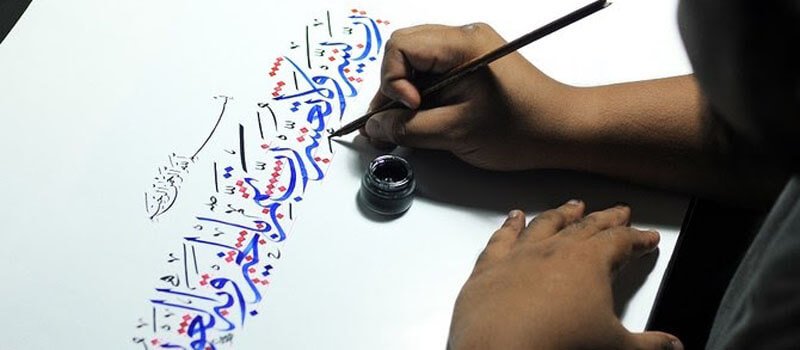
Writing Arabic by hand feels different than typing
Typing Arabic has become remarkably straightforward.
Windows 11, Windows 10, macOS, Android 15, iOS 18, ChromeOS, and most Linux distributions include Arabic keyboard layouts without requiring third-party software. After adding Arabic as an input language, switching keyboards generally takes only a keyboard shortcut or tap.
Handwriting is another story.
Letters connect continuously, and maintaining consistent spacing takes practice.
Beginners often make three mistakes:
Lifting the pen too often
Forgetting which letters don't connect afterward
Mixing printed letter forms with handwritten ones
Don't chase beautiful handwriting immediately.
Focus on readable handwriting.
There's a difference.
Build words instead of memorizing lists
Vocabulary sticks better when every new word reinforces reading.
Instead of learning random nouns, group related words.
Arabic | Transliteration | Meaning |
|---|---|---|
بيت | bayt | House |
باب | bāb | Door |
كتاب | kitāb | Book |
قلم | qalam | Pen |
مدرسة | madrasah | School |
Notice something?
Letters you've already learned keep reappearing.
Recognition compounds.
That repetition matters more than memorizing hundreds of isolated flashcards.
Why Arabic letters keep changing shape
This frustrates almost everyone.
Consider the letter ع.
Depending on position, it may appear as:
ع
عـ
ـعـ
ـع
At first they look unrelated.
They're actually the same letter wearing different "joining" forms.
Native readers don't consciously notice the changes, much like English readers don't analyze cursive handwriting every time they see it.
Eventually, neither will you.
Reading aloud speeds everything up
Silent reading has its place.
Early on, speaking each word out loud forces your brain to connect:
Visual recognition
Pronunciation
Listening
Memory
Those four systems reinforce each other.
Language acquisition research consistently finds that repeated retrieval—actively recalling sounds and meanings rather than merely recognizing them—improves long-term retention more effectively than passive review alone. Reading aloud naturally creates that retrieval cycle.
Don't worry if your pronunciation isn't perfect.
Accuracy grows through repetition.
Resources that beginners actually finish
A shelf full of grammar books isn't necessary.
Consistency is.
A practical weekly routine might look like this:
Day | Focus |
|---|---|
Monday | Learn 4–5 letters |
Tuesday | Read simple syllables |
Wednesday | Copy short words |
Thursday | Practice pronunciation |
Friday | Read beginner stories |
Weekend | Review everything |
Short sessions work surprisingly well.
Fifteen focused minutes every day usually beats two exhausting hours once a week.
If you're looking for trustworthy learning material, beginner courses from organizations such as the Foreign Service Institute (FSI), Madinah Arabic, and university language departments provide structured progression rooted in established teaching methods. Children's readers with full vowel markings are also excellent because they're designed specifically for developing reading fluency.
Common beginner mistakes worth avoiding
Some mistakes seem harmless.
They slow progress more than expected.
Trying to memorize every grammar rule first.
Grammar becomes much easier after reading feels natural.
Ignoring pronunciation.
Letters like ع, غ, ص, ض, and ق require practice. Replacing them with English sounds creates habits that become harder to fix later.
Skipping review.
You'll forget letters.
That's normal.
Returning to yesterday's material is part of learning, not evidence of failure.
Rushing into unvowelled texts.
News articles can wait. Children's readers, graded readers, and beginner textbooks build confidence much faster.
FAQs
How long does it take to learn the Arabic alphabet?
Most learners can recognize all 28 letters within two to four weeks of consistent daily practice. Reading fluently takes longer because connected letter forms and omitted vowels require repeated exposure.
Should I learn Modern Standard Arabic or a dialect first?
Modern Standard Arabic (MSA) is usually the best starting point for reading and writing. It's used in books, newspapers, education, and formal media across the Arabic-speaking world. Spoken dialects become easier to learn afterward.
Is Arabic harder than English?
Its writing system looks unfamiliar, but Arabic follows consistent spelling rules. English contains many irregular spellings, while Arabic pronunciation is generally more predictable once you've learned the script.
Do I need perfect handwriting?
No. Clear, readable writing matters far more than artistic calligraphy. Improve speed and style gradually after you're comfortable reading connected letters.
What's the fastest way to improve reading?
Read short, fully vowelled texts every day, say each word aloud, and revisit familiar passages instead of constantly searching for new material. Repeated exposure builds recognition surprisingly quickly.
Keep turning pages
The first week feels awkward. The second feels slightly less so. Then one day you'll recognize an entire sentence without stopping to decode every letter individually.
That's the breakthrough worth chasing.
Choose a handful of letters, read something simple today, and come back tomorrow. Another page. Another paragraph. Those small sessions add up faster than most beginners expect.
learn Arabic for beginners
Arabic reading guide
Arabic writing lessons
Arabic alphabet tutorial
Found this helpful? Share it!