
Best Resources to Learn Hindi: Apps, Books, and Websites
481 views
Learning Hindi sounds straightforward until you actually start. The script looks unfamiliar. Words seem to change depending on gender. Native speakers often speak much faster than the slow audio lessons you've been practicing with. Then comes another problem: too many resources, not enough direction.
I've seen learners bounce between five apps, buy expensive textbooks they never finish, and spend weeks memorizing vocabulary without holding a simple conversation. That usually ends in frustration.
A better approach? Pick a handful of resources that complement each other instead of competing for your attention. One app for daily practice, one solid grammar reference, one source of authentic content, and consistent speaking practice. That's where real progress happens.
Start with an app—but don't stop there
Language-learning apps are excellent for building habits. They aren't complete language courses.
The biggest mistake beginners make is assuming a 500-day streak equals fluency. It doesn't.
Duolingo
Duolingo remains one of the most accessible starting points for Hindi learners on Android, iOS, and the web.
Some notable features include:
Short lessons that typically take 3–8 minutes
Daily streak tracking
Speaking and listening exercises
Personalized review using spaced repetition
Offline lessons for certain mobile content (depending on version and subscription)
The free version includes advertisements and a heart system limiting mistakes. The paid Super Duolingo subscription removes ads and adds unlimited hearts, offline access, and practice sessions. Pricing varies by country but commonly ranges between US$7–13 per month on annual plans.
It excels at vocabulary and sentence recognition.
Grammar explanations? Less so.
Many learners eventually notice they can translate "The elephant drinks water" perfectly but struggle when someone asks, "How was your weekend?" That's a normal limitation of heavily structured exercises.
Mondly and Drops: Better for vocabulary
Different apps solve different problems.
Drops focuses almost entirely on vocabulary through visual associations. Sessions are intentionally short—usually five minutes for free users—which makes daily consistency surprisingly easy.
Mondly adds:
Speech recognition
Conversation simulations
Progress tracking
Grammar notes
AR and VR learning experiences on supported devices
Speech recognition isn't flawless. Background noise, budget phone microphones, or regional accents can occasionally confuse pronunciation scoring. That's true across nearly every language-learning platform.
Still, both apps make vocabulary review less repetitive than flashcards alone.
Nothing beats Anki for long-term memory
Here's the resource many advanced learners eventually discover.
Anki.
It's free on Windows, macOS, Linux, and Android. The iOS version is paid, while AnkiWeb allows browser-based syncing across devices.
Unlike fixed learning apps, Anki uses spaced repetition, showing cards right before you're likely to forget them. The scheduling algorithm has evolved over time, with newer releases supporting FSRS (Free Spaced Repetition Scheduler), giving users more accurate review intervals after enabling the updated scheduling option.
Create your own deck.
That's the secret.
Instead of downloading massive vocabulary lists you'll never use, add words from Hindi YouTube videos, conversations, songs, or books you've actually encountered. Personal vocabulary sticks much better.
Books that actually explain Hindi grammar
Apps introduce words.
Books explain why they work.
Complete Hindi by Rupert Snell
For English speakers, this remains one of the strongest beginner-friendly courses.
It combines:
Reading practice
Grammar explanations
Dialogues
Exercises
Audio materials in newer editions
Rather than overwhelming readers with technical grammar terminology, it gradually introduces sentence structure in a practical way.
Teach Yourself Hindi
Another respected option.
Its conversational format feels more natural than traditional academic textbooks. Chapters often revolve around realistic situations like shopping, transportation, or meeting people instead of isolated vocabulary themes.
Some learners find the pacing slightly faster than expected, especially once verb conjugations become more complex.
That's perfectly normal.
Read each chapter twice if needed.
Elementary Hindi by Richard Delacy and Sudha Joshi
Learners aiming for university-level study often recommend this textbook.
It spends more time explaining grammar than many casual language books.
That means slower progress initially—but fewer confusing gaps later.
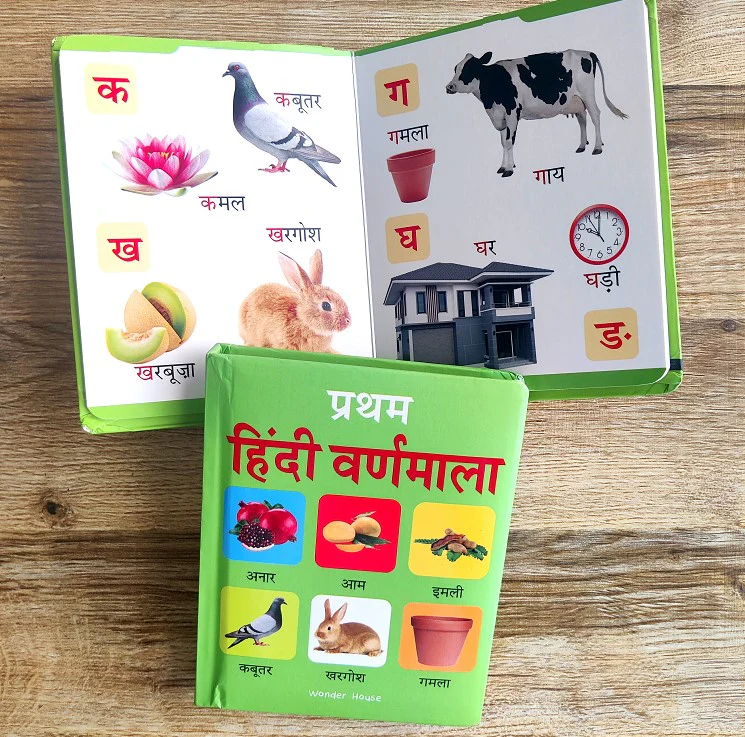
Don't ignore children's books
It sounds too simple.
It isn't.
Hindi children's books usually contain:
Short sentences
Common vocabulary
Frequent repetition
Clear illustrations
Everyday grammar
Those characteristics make them excellent stepping stones before tackling newspapers or novels.
Many learners discover they can comfortably finish ten children's stories before reading their first adult novel.
That's real progress.
The best websites for structured learning
HindiPod101
HindiPod101 combines podcasts, vocabulary lists, grammar lessons, quizzes, downloadable lesson notes, and native-speaker audio.
Premium subscriptions unlock additional study tools, while free accounts still provide substantial introductory material.
Its biggest strength is listening practice.
You'll hear natural pronunciation from native speakers instead of robotic text-to-speech voices.
Digital Dialects
This website looks dated.
Really dated.
Yet it remains surprisingly useful for beginners because it offers lightweight browser-based vocabulary games requiring no installation or account creation.
Sometimes simplicity wins.
Open educational resources
Several universities publish introductory Hindi materials online through open educational initiatives. These often include grammar worksheets, vocabulary lists, and reading passages developed for academic language courses.
They're less flashy than commercial apps.
They're also remarkably thorough.
Learn the Devanagari script early
Many beginners delay learning the Hindi writing system.
Bad idea.
Romanized Hindi helps during the first week or two, but pronunciation quickly becomes confusing because English spelling doesn't accurately represent Hindi sounds.
The Devanagari script contains:
Skill | Why it matters |
|---|---|
Independent vowels | Essential for reading words correctly |
Consonants | Form the foundation of nearly every word |
Matras | Modify vowel sounds attached to consonants |
Conjunct consonants | Common in everyday reading and newspapers |
Fortunately, Unicode support means modern operating systems—including Windows 11, macOS, Android, iOS, and Linux—display Devanagari natively without requiring additional fonts.
Google Input Tools and Gboard also allow phonetic typing, where typing "namaste" automatically converts to "नमस्ते." That makes writing practice much less intimidating.
YouTube channels worth following
Native video content fills the gap left by structured lessons.
Look for creators who speak naturally but explain concepts clearly.
Some consistently recommended channels include:
Learn Hindi with Anil Mahato
Pebbles Hindi
Hindi Unlocked
HindiPod101's official YouTube channel
A useful trick: slow playback speed to 0.75× during difficult explanations. YouTube preserves audio pitch while reducing speed, making pronunciation easier to distinguish.
Subtitles help.
Just don't rely on them forever.
Practice with real speakers sooner than you think
Many learners wait until they're "ready."
That day rarely arrives.
After learning roughly 500–800 common words and basic sentence patterns, short conversations become possible.
Expect mistakes.
Lots of them.
Gender agreement causes confusion. Honorific forms like आप, तुम, and तू take time to master. Native speakers often shorten words in casual speech, making textbook dialogues sound unusually formal by comparison.
Those awkward conversations accelerate learning far more than another week of flashcards.
Combining resources into a practical study routine
You don't need ten apps.
You need consistency.
A balanced weekly routine might look like this:
Spend 15–20 minutes on Duolingo or Mondly for structured lessons.
Review personalized Anki cards for another 10 minutes, then read a few pages from a beginner textbook or children's story before finishing with five minutes of native Hindi audio.
That's roughly forty minutes.
Manageable.
More importantly, sustainable.
Common mistakes that slow learners down
Some patterns appear again and again.
Memorizing isolated vocabulary without complete sentences.
Ignoring listening practice for months.
Avoiding Devanagari because Romanized Hindi feels easier.
Jumping between six different apps every week.
Waiting too long before speaking with native speakers.
Progress becomes noticeably faster once those habits disappear.
Frequently Asked Questions
Is Duolingo enough to become fluent in Hindi?
No. Duolingo builds vocabulary and basic sentence recognition effectively, but fluency requires listening practice, grammar study, reading, writing, and conversations with native speakers.
How long does it take to learn conversational Hindi?
According to estimates from language training organizations such as the U.S. Foreign Service Institute, English speakers generally need several hundred hours of focused study to reach professional working proficiency in Hindi. Casual conversational ability usually develops much sooner with consistent daily practice.
Should I learn Devanagari before speaking?
You don't have to master it first, but learning the script during your first few weeks makes pronunciation, reading, and vocabulary retention much easier.
Are free resources enough?
Yes, especially at the beginner stage. Combining free tools like Duolingo, Anki, YouTube lessons, Hindi podcasts, and open educational materials can provide an excellent foundation before investing in paid courses.
What's the best combination of resources?
For most beginners, a practical mix includes one structured app, one grammar-focused textbook, Anki for vocabulary review, authentic YouTube content for listening, and regular conversations with native speakers.
Your next step
Don't spend another week comparing every app or reading endless reviews. Choose one learning app, one trusted grammar book, and one source of authentic Hindi audio today. Build a routine you can actually maintain for months rather than days, and you'll notice something encouraging: the language gradually stops feeling like a puzzle and starts feeling familiar.
language resources
learning apps
[language] books
study tools
best websites
Found this helpful? Share it!